
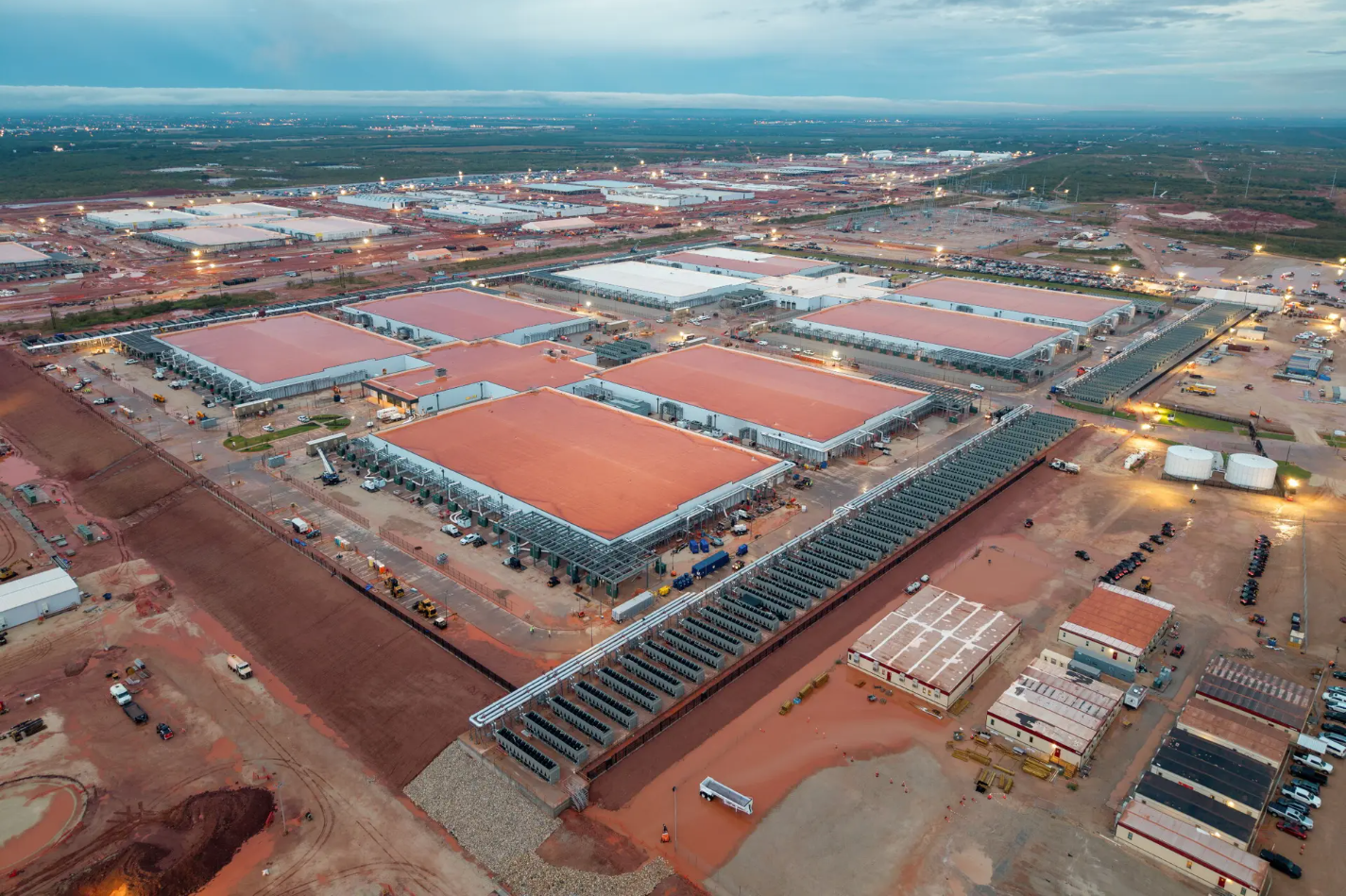

The next AI real estate investment may not be a data center.
Despite their appeal, data centers can be difficult for real estate investors to own directly. A single hyperscale facility can require as much capital as an entire traditional real estate fund, according to a new report from the nonprofit Urban Land Institute and global real estate investment management firm Heitman. Running a data center also demands specialized knowledge and continual investment to keep pace with changing technology.
Another risk is the small tenant pool. Just seven technology companies account for U.S. hyperscale data center tenancy, the report says. Imagine losing one: The owner is left with an enormous customized facility and a very short list of potential replacements.
“If you’re not with the major players but want to benefit from the AI data center boom, you need to look at adjacents,” said one industry participant interviewed in the study.
The report, “Investment Strategies in the AI Era: Power Is the New Location,” mapped out the following six opportunities.
Powered land
The first recommendation starts with land. But not every parcel is equal. What increasingly matters is how much power comes with it and how quickly power is available.
In Loudoun County, Virginia, industrial sites are trading for more than $4 million an acre, according to the Urban Land Institute. Sites that can secure electricity within 18 to 36 months are drawing the most interest.
However, some investors think this play has already become harder. “Twenty-four months ago, it was an opportunity,” said one U.S. investor interviewed for the report. “But it was a steep learning curve and now it is too late. Returns have been watered down by what the risk profile has become.”
Still, the need for powered land could have years to run. Global real estate investment manager Hines estimates roughly 40,000 acres, or nearly 2 billion square feet, will be needed globally over the next five years as more data centers are built.
Battery storage
The second bet is battery storage.
Owners of industrial sites, self-storage facilities, parking lots and land near substations are leasing unused space to battery developers. The developer pays to build and operate the batteries, while the property owner collects rent.
One example is Xcel Energy’s Capacity*Connect program in Minnesota. The program plans to install up to 200 megawatts of batteries across commercial and industrial sites by 2028, backed by roughly $430 million in payments to participating property owners.
Warehouse play
Then there are warehouses.
As manufacturers add more robots and automated equipment, buildings with enough electricity to run them are becoming more valuable. Some industrial operations need 1 to 5 megawatts of power, roughly as much electricity as 800 to 4,000 homes, according to the ULI report. Some manufacturing plants use four times that amount.
That requirement is putting a premium on warehouses that already have plenty of power. Data from J.P. Morgan found that warehouses and distribution centers with more than 4,000 amps of power are selling for more per square foot than industrial properties overall.
Housing and storage
The fourth play follows the construction crews.
Huge data center campuses can bring thousands of workers and large amounts of equipment into markets that may not have enough housing or warehouse space. “What about housing for people who work in data centers in the middle of nowhere?” one interviewee in the report asked.
The need is showing up in Abilene, Texas, home to the first Stargate project. DataCenterPads and Nika Corporate Housing are adding short-term modular housing and permanent homes for workers around the development.
The equipment needs somewhere to go, too. Warehouses and outdoor storage sites are being used to stage construction materials and maintenance equipment. Data-center-related tenants accounted for 14.4% of industrial leasing across six major U.S. data center markets in 2025, up 44% from a year earlier, according to Cushman & Wakefield research.
Converting existing buildings
Investors are also looking to convert existing properties for AI computing.
Warehouses, manufacturing plants and former industrial campuses with substantial power and fiber connections are potential candidates. Obsolete offices and big-box stores could work for smaller computing operations in some markets, according to the report.
The idea is to start with a property that has some of the infrastructure a computing facility needs rather than build it all from scratch. But reusing an old building doesn’t always pencil out.
There are exceptions. “The only case where this is not true [is] if there is a speed-to-market advantage, or a planning issue that prevents you from developing a new building,” said one investment manager interviewed for the report.
Owners may still need to spend heavily on cooling systems and electrical upgrades.
Localized AI computing
The sixth strategy could fit in a small corner of a building.
Property owners with extra electrical capacity could lease a small piece of their building to companies that need computing space closer to their users, according to the Urban Land Institute. As AI use expands, more computing will be needed to run trained models and return answers in real time, a process known as inference. Unlike training a large AI model, some of that work can happen closer to the people and businesses using it.
Those operations can also be much smaller than a traditional data center. The report said they could range from about 50 kilowatts to several megawatts, a fraction of the power required at a massive data center campus. By comparison, a hyperscale data center typically starts around 100 megawatts and can exceed 1 gigawatt.
Not every one of these ideas may pan out. “Because no one can predict what will happen,” said one interviewee in the report. “There is a huge need for businesses to be able [to] stress test and plan for a range of scenarios.”
Leave A Comment